Movie review
Bad Apples
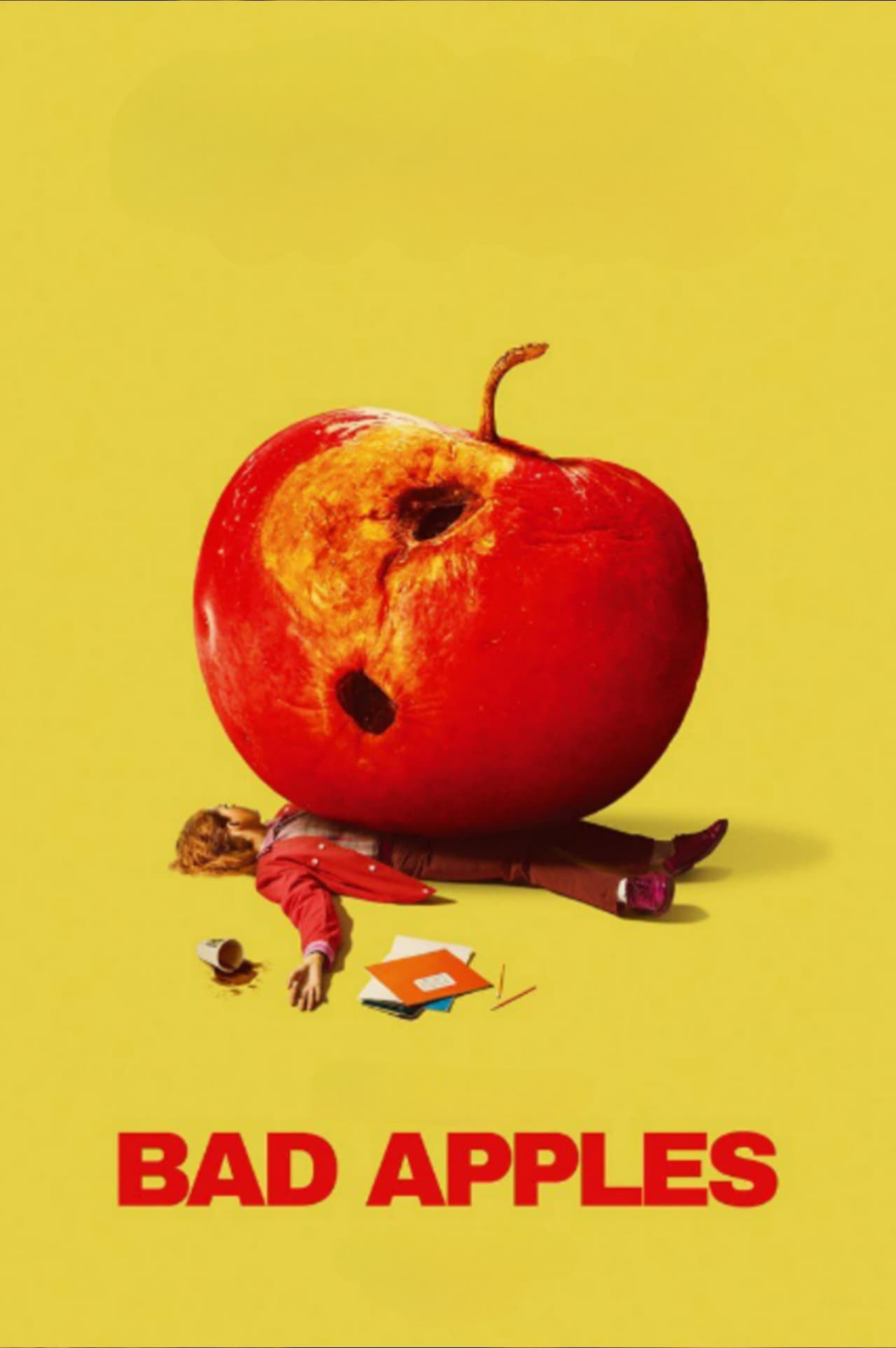
Bad Apples is a dark comic satire served with a side of vanilla ice cream. What impressed me most is how completely it commits to its ridiculous premise: a teacher kidnaps one of her students, keeps him in her basement, and somehow remains a person whose frustrations I can understand. That is a difficult balance to maintain. For the most part, the movie pulls it off.
The absurdity works because there is a clear idea underneath it. A school can measure how much a classroom improves when a difficult child disappears without asking what that child needed in the first place. Bad Apples follows that logic somewhere horrible, and I found it very funny.
Spoilers ahead, including the ending.
★ Story
Maria Spencer is a Year 5 teacher at a primary school in Somerset. Her class is struggling, an Ofsted inspection is approaching, and Danny makes getting through a lesson feel almost impossible. He sabotages a trip to the cider mill, disrupts the classroom, and pushes Pauline down the stairs, breaking her arm. The opening steadily builds Maria’s frustration while the school keeps asking her to produce better results.
When Maria later finds Danny vandalizing cars, she intervenes and accidentally knocks him unconscious. She initially tries to take him to the hospital, but he wakes up and threatens to accuse her of assault. She panics, takes him home, and eventually locks him in the basement. Bringing him home is the point where her decision becomes indefensible, but the film has done enough work that I can follow the panic behind it. Understanding how she gets there keeps the story involving without making her actions acceptable.
Then the arrangement starts producing results. Without Danny, the class performs well during the inspection and Maria receives praise. Downstairs at home, she discovers that Danny can barely write and has been relying on other students to complete his work. She begins tutoring him, and he actually starts learning. The idea that he receives a better education while being held captive is both ridiculous and central to why the story works.
I especially liked the small changes in their relationship. Earlier, Maria spends her empty evenings playing Farming Simulator alone. Later, she and Danny play FIFA together. For a moment, he looks like an ordinary kid enjoying a game with an adult who has time for him. Those scenes give their relationship enough warmth to make the situation more uncomfortable. Maria is capable of helping him, even while doing something terrible to him.
★ Metaphor
The cider-mill opening sets up the film’s metaphor before Maria ever locks a door. Apples move neatly through a processing line until Danny throws a shoe into the machinery. It travels through the system until it causes a breakdown, forcing the operators to stop everything. Maria runs after Danny, leaving the rest of her class behind. One disruption is enough to pull the whole operation away from its intended purpose.
Danny initially seems to be the obvious “bad apple.” Remove him and the classroom improves almost immediately. But the more the film shows us of the children and their parents, the less useful that label becomes.
Pauline is the best example. She appears to be everything Danny is not: quiet, obedient, eager to participate. Yet her cast tells another story. She asks Maria to sign it, and almost nobody else has. I loved that detail because it establishes her loneliness without needing a speech about it. Danny demands attention through disruption; Pauline tries to earn it by being the perfect student. Her need is easier for the school to ignore because it initially causes less trouble.
Once Pauline discovers Danny in the basement, she uses Maria’s secret to demand attention and special treatment, from one of Maria’s dresses to Danny’s PlayStation. Her behavior grows more troubling, but the need behind it has been there all along.
The parents sharpen that contrast. Danny’s father, Josh, is a delivery driver whose job keeps making him late and unavailable. From the school’s perspective, he looks irresponsible. Pauline’s father owns the cider mill and has money and standing in the community. Yet when Maria brings Pauline home, her parents are busy partying and have barely noticed their daughter was missing. Josh’s struggle is visible; their neglect is comfortably hidden by their circumstances.
Both children need attention. Only one has been identified as the problem. The film earns its metaphor star by continuing to question who the bad apple is, and whether removing one person fixes anything beyond the numbers.
★ Twist
The turn that really worked for me comes when Pauline exposes Maria at the parents’ evening. Once Maria admits she has Danny locked in her basement, the obvious next step is to call the police. Instead, the PTA wants a vote.
That changes the scale of the whole story. Maria’s secret becomes something the other adults are willing to protect because their children are happier and the school is performing better. Sylvia tries to call the police, but Pauline’s father takes her phone. Later, Sam explains that the parents have voted against reporting Maria. Sylvia has resigned, he has become headteacher, and he also intends to keep quiet. Everyone has found a reason to accept an arrangement that benefits them.
It is completely unrealistic, but by this point I bought into the film’s willingness to follow its premise that far. The discovery does not restore order. It reveals how many people will defend this version of it.
The ending gives that reversal a strong payoff. Maria is celebrated at a school assembly, complete with a scholarship honoring the still-missing Danny. Josh sits in the audience grieving for his son while the ceremony congratulates the institution that has failed him.
Meanwhile, Danny uses an electric toothbrush to work through the mortar in Maria’s basement wall. An Oral-B is an absurd escape tool, but I liked what the escape suggests: Maria has actually taught him something. I read his patience and resourcefulness as the practical result of the attention she finally gave him. He puts those abilities to use freeing himself from her.
The final image of Danny running alongside the road matters. The adults may have agreed that removing him was a success, but the film gives him a future outside their arrangement.
★ Humor
My favorite example of the film’s dark humor is the harness delivery. Maria orders something to restrain Danny more securely, and Danny’s own father delivers it while searching for his missing son. The coincidence is horrible enough to be funny, but Josh’s situation gives it an extra sting. He is distraught and still has to finish his route. Even this cannot release him from the demands of his job.
The parents’ evening is the other standout. Everyone takes the debate so seriously that it becomes funnier the longer it continues. While the parents argue over whether kidnapping has improved the school, Maria tries to back away and hide behind a Christmas tree. Pauline immediately points her out. Maria ends up locked in a cupboard while the adults deliberate over the benefits of her keeping a child locked in a basement.
I liked how much of the comedy comes from practical responses to an outrageous situation. There are deliveries to make, meetings to hold, and procedures to follow. The adults keep handling the next small task until something appalling begins to look like normal school business. The movie’s confidence in that joke is what makes the exaggeration work for me.
Final verdict
Four stars for Story, Metaphor, Twist, and Humor. Bad Apples asks a lot of the viewer’s willingness to go along with it, but its commitment to the premise won me over.
Maria cannot give thirty students individual attention. Josh’s delivery job leaves him struggling to be present for his son. Pauline’s parents have the resources to pay attention and barely do. The film connects those different failures, then lets the school congratulate itself for making the most disruptive evidence disappear.
What stayed with me was Danny’s capacity to learn once somebody finally teaches him. That gives the comedy something to return to, however absurd it gets. The school has mistaken a quieter classroom for a solved problem, and Bad Apples is willing to follow that mistake all the way to an awards ceremony.